
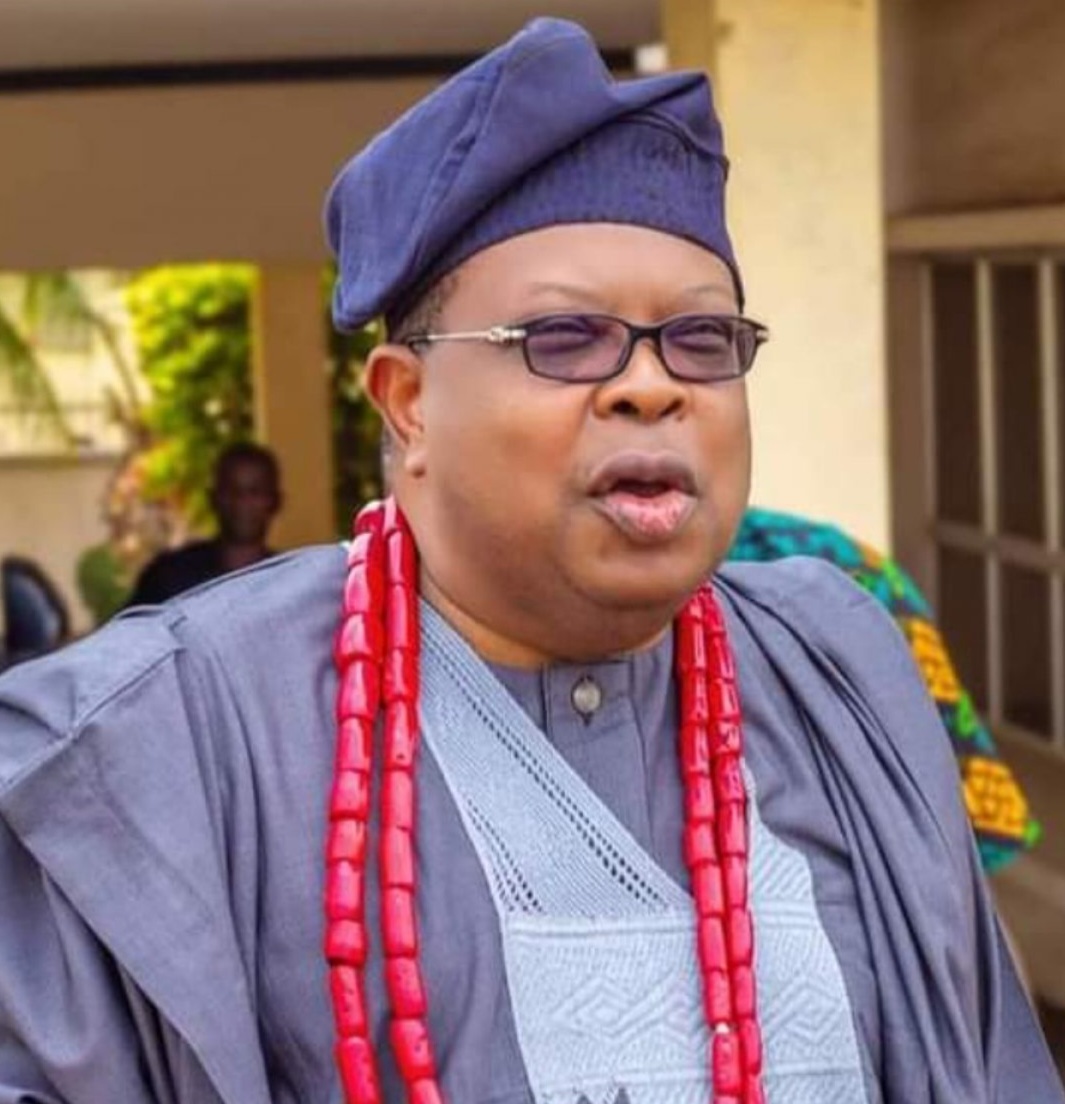
Minister of Power, Joseph Tegbe
By Our Reporter
The Federal Government has ruled out any increase in electricity tariffs, even as power generation climbed to a peak of 5,330 megawatts (MW) in August and September, up from between 3,700MW and 4,700MW before June.
Minister of Power, Joseph Tegbe, made the declaration at a media parley in Abuja to mark his first 100 days in office, saying the government was focused instead on stabilising the electricity value chain, restoring financial discipline and strengthening governance across the sector.
“Let me categorically state, and this is not a political statement, we have no plan to increase electricity tariffs,” Tegbe told journalists.
The minister disclosed that the government had mobilised an estimated ₦1.23 trillion towards settling the backlog of power-sector debt, as part of a wider effort to address the sector’s estimated ₦3.3 trillion debt burden.
He said the financing was expected to improve liquidity in the electricity market and strengthen the capacity of operators to sustain generation and supply.
Tegbe also announced the return of the 375MW Alaoji open-cycle power plant to the national grid after three years offline.
He said newly commissioned transformers at Apapa, Ijora, Alausa and Lekki in Lagos had unlocked 672MW of transmission capacity, while a new 300MVA transformer at Katampe, Abuja, had unlocked another 240MW.
The minister said the government had also worked with relevant agencies to release more than 300 containers of critical power equipment held at the ports, describing the situation as one of the sector’s peculiar paradoxes: unfinished electricity projects existing alongside equipment stranded in storage.
On metering, Tegbe said about 350,000 meters had been installed during his first 100 days, bringing cumulative installations to 1,004,260 as of August 2026.
He said the resolution of the AMMON litigation had further unlocked the procurement of about 1.4 million smart meters.
Another 90,000 meters, he added, had been installed in military formations, while 5,000 young Nigerians were being trained under the Power Force programme as smart-meter installers.
The minister, however, acknowledged that improvements in national generation figures did not necessarily mean that every Nigerian was experiencing better electricity supply.
“National progress can coexist with an unreliable feeder in a particular community,” he said, stressing that the ministry’s challenge was to ensure that improvements recorded in some locations were extended to communities across the country.
—Renewables, grid stabilisation—
Tegbe said 62 solar and mini-grid installations had been completed across 30 states, representing about 43.6MW of installed solar capacity, 41,735 new connections and an estimated beneficiary reach of more than 208,000 people.
He cited the recently commissioned 3MW solar hybrid system at Yakubu Gowon University, Abuja, as part of efforts to provide more dependable electricity to educational institutions.
The minister also announced the launch of the Renewable Asset Management Company, which he said would professionally manage publicly financed renewable-energy assets and seek to raise ₦3 trillion over the coming years.
Looking ahead, Tegbe said the next six months would be devoted to converting the repairs and reforms undertaken during his first 100 days into more visible improvements in electricity supply.
He identified the Lagos, Enugu-Port Harcourt and Abuja-Kaduna-Kano transmission corridors as priorities for grid stabilisation.
He also pledged greater transparency through the use of performance indicators and scorecards, publication of project costs and operator performance, accelerated universal metering, and stronger action against vandalism and electricity theft.
“It’s been 100 days on this assignment,” Tegbe said. “This is not to say that we have reached our destination, not at all. But we have made modest progress.”
He urged the media to maintain scrutiny of the power sector while calling on communities to help protect electricity infrastructure.
“Electricity reform serves every Nigerian, whatever their political affiliation or place of residence,” the minister said.