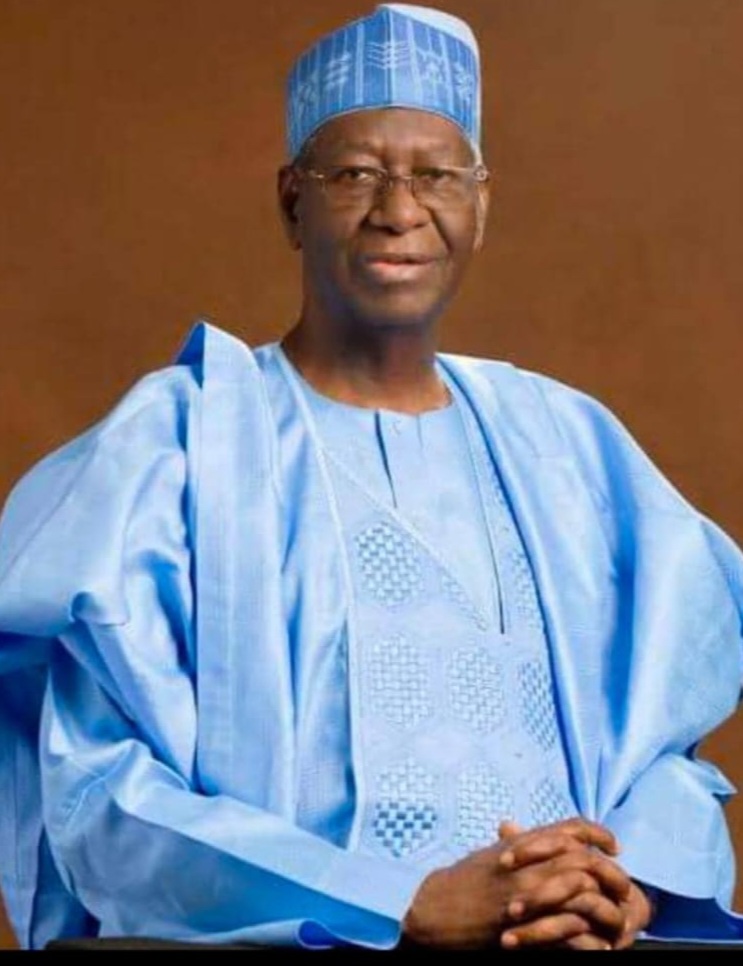
Late Chief Tony Anenih
There are men whose lives become so closely associated with the exercise of political power that, in the telling of their stories, the human being gradually disappears behind the public persona. Their names become shorthand for political influence, their opinions acquire the weight of authority, and their presence at the centre of affairs becomes almost inseparable from the affairs themselves.
Yet, when such men leave the stage, a different set of questions emerges. Beyond the offices they occupied and the political battles they fought, what did they mean to the people who knew them? What did they give, what did they build, and what remains of them in the lives of others?
Chief Anthony Akhakon Anenih, CFR, the revered Iyasele of Esanland, belonged to this category of consequential Nigerians. Popularly known as Tony Anenih and widely called Mr Fix It, he died on October 28, 2018, at the age of 85, leaving behind a political legacy that remains a subject of national interest.
At the eighth anniversary of his passing today, it is worth looking beyond the familiar accounts of his political calculations to consider the man whose life was also defined by generosity, mentorship, community service and an abiding belief in the possibilities of human advancement.
For Anenih was more than a political strategist. He was a father figure to many, a benefactor to institutions, a patron of younger politicians and a man whose personal resources, time and influence were often deployed in the service of others. These aspects of his life deserve their own place in the national memory.
––The Making of a Political Institution—
Born on August 4, 1933, in Uzenema-Arue, Uromi, in present-day Edo State, Anenih’s journey to national prominence was neither accidental nor effortless. He joined the Nigeria Police Force in 1951 and rose through the ranks, receiving professional training in Nigeria, Britain and the United States. He retired as a commissioner of police before venturing into business and partisan politics.
His transition from policing to politics placed him at the intersection of two demanding worlds: the disciplined environment of public service and the intricate, frequently unpredictable arena of Nigerian political competition.
Over the decades, he occupied positions of considerable influence. He chaired the National Party of Nigeria in the old Bendel State, became national chairman of the Social Democratic Party during the military transition of the early 1990s, participated in the constitutional conference of 1994, and later emerged as one of the founding political figures of the Peoples Democratic Party. Under President Olusegun Obasanjo, he served as Minister of Works and Housing before becoming chairman of the PDP’s Board of Trustees.
These were consequential years in Nigeria’s political development. Anenih’s influence extended across administrations, political transitions and internal party struggles. His ability to build relationships, negotiate compromises and bring contending interests to the table earned him the sobriquet by which generations of Nigerians came to know him.
The expression Mr Fix It was an acknowledgement of his reputation as a political problem-solver. But the more revealing explanation came from the Catholic Bishop of Uromi, Most Rev. Dr Donatus Ogun, during Anenih’s funeral Mass in December 2018. The bishop observed that Anenih was called Mr Fix It not because he could solve every problem, but because he believed that problems could be solved when people were prepared to shift their positions.
That distinction is important. It captures something beyond political dexterity: the understanding that disagreement need not be permanent and that even difficult situations may yield to dialogue, patience and a willingness to compromise.
Nigeria, a country whose political life is frequently strained by mistrust, competing interests and the inability of leaders to find common ground, could do with more of that disposition.
––A Generosity That Outlived His Political Influence—
Perhaps one of the most revealing aspects of Anenih’s life emerged after his death.
At his funeral, Bishop Ogun described him as exceptionally generous, declaring that he gave freely of his person, time and resources. The bishop’s assessment was striking not merely because it came from a religious leader, but because it spoke to a dimension of Anenih’s character that the familiar political narrative often obscured.
To many Nigerians, Anenih was the formidable political operator who could be found at the centre of high-level negotiations. To others, he was the man who listened, offered counsel, extended assistance and opened doors that might otherwise have remained closed.
A personal account published by TheCable after his death described him as caring, attentive and particularly willing, in his later years, to assist people who crossed his path and whom he considered deserving of his time and attention. The writer also recalled how Anenih intervened during meetings with media professionals, smoothing tensions, offering reassurance and providing guidance to those working in public communication.
It was a revealing portrait of a man who understood that leadership was not always exercised through formal authority. Sometimes, it was expressed through a reassuring word, an intervention at the right moment or the willingness to lend one’s experience to someone navigating an unfamiliar terrain.
There is an important lesson here. The value of a man is not measured exclusively by the number of people who seek an audience with him while he occupies a position of influence. It is also measured by what happens when those encounters are over, when the visitor returns to the world outside and discovers that the meeting has made a difference.
In Anenih’s case, the accounts of those who knew him suggest that many people left such encounters with more than they had brought into the room.
His eldest son, Anthony Anenih Jnr., offered another poignant perspective at the funeral. He said he was discovering more about his father in death through heartwarming stories shared by people from within and outside Nigeria. Here was a son who had known his father intimately, yet continued to encounter new dimensions of the man’s life through the testimonies of others.
There can be few more compelling measures of a person’s reach than this: the discovery, after death, that the lives he touched extended beyond the familiar boundaries of family, friendship and political association.
—Investing in People and Institutions—
Anenih’s generosity was not confined to personal relationships. It also found expression in support for education, healthcare and institutions of learning.
He believed strongly in the transformative power of education. At his funeral, his son recalled his conviction that good education was the surest route to a successful life and the most important investment a person could make.
This belief was reflected in his support for educational and academic institutions, including Ambrose Alli University, Ekpoma; the University of Benin; and Igbinedion University, Okada. Such support deserves recognition in a country where the relationship between public influence and the advancement of learning has too often been neglected.
More significantly, his concern for the welfare of older citizens found concrete expression in the establishment of a geriatric centre at the University College Hospital, Ibadan, in 2012. Contemporary accounts described it as the first of its kind in Africa.
The initiative deserves particular attention. In societies where the elderly are frequently celebrated in speeches but insufficiently provided for in practice, investing in specialised care for older people represents a practical acknowledgement of human dignity.
Ageing is an unavoidable part of the human experience. The people who built families, communities and institutions will, in time, need care themselves. A society that recognises this obligation and provides facilities to meet it demonstrates a measure of collective maturity.
Anenih’s contribution to geriatric care was therefore more than a philanthropic gesture. It was an investment in an area of healthcare that deserves sustained national attention.
These interventions also remind us that philanthropy can be most valuable when it creates something that outlasts the original benefactor. A personal gift may relieve an immediate need, but an institution can serve generations of people who may never know the name of the person who helped establish it.
This is one reason Anenih’s contributions to education and healthcare deserve a place alongside his political achievements in any fair assessment of his life.
––A Son of Esanland, a Figure of National Consequence—
For all his national prominence, Anenih remained deeply connected to his roots in Uromi and the wider Esan community.
His traditional title, Iyasele of Esanland, reflected the standing he enjoyed among his people. His home community was not simply the geographical point from which he began his journey; it remained a central reference point in his public identity.
His influence helped bring many younger people into the political arena, providing them with opportunities to learn, establish relationships and participate in public life. In this respect, his legacy is not limited to the offices he personally occupied. It includes the people he encouraged, the doors he opened and the political networks through which others found their footing.
Mentorship is an often-neglected dimension of leadership. It is possible to occupy high office, exercise enormous influence and still leave behind no meaningful succession of capable people. A different kind of leader recognises that experience acquires greater value when it is shared.
The stories surrounding Anenih’s life suggest that he understood this responsibility. His willingness to receive people, listen to their concerns and guide those who sought his counsel was an important part of his influence.
Yet his significance was never confined to Esanland or Edo State. His political career took him into the national arena, where he worked with people of different backgrounds and political persuasions. His funeral, attended by representatives of opposing political traditions, offered a reminder of the breadth of the relationships he had cultivated.
President Muhammadu Buhari was represented at the funeral, while former President Goodluck Jonathan and other prominent political figures were among those who gathered in Uromi to pay their respects.
In a political culture where disagreements can become personal and temporary differences harden into enduring enmities, the capacity to maintain relationships across political divides is not insignificant.
It does not mean that political differences should be abandoned or that every compromise is necessarily wise. It means that a country cannot be governed effectively if its political actors lose the capacity to speak to one another.
Anenih’s experience offers a useful reminder that the work of politics involves more than winning contests. It also involves managing differences, sustaining relationships and finding ways to move a country forward despite competing interests.
—Remembering the Man Beyond the Myth—
No serious account of Tony Anenih’s life can pretend that his political career was free of controversy. His proximity to power, his influence within the PDP and his participation in the fierce political struggles of his era inevitably attracted criticism and scrutiny.
A worthy tribute does not require us to erase those complexities. Nor does respect for the dead demand that history be rewritten to accommodate sentiment.
But there is a difference between an honest reckoning with a public figure’s life and allowing controversy to consume the entirety of his memory. The former is necessary to history; the latter risks obscuring the very human experiences that make a life worth examining.
Anenih’s political career will continue to invite analysis. His strategies will be debated, his decisions examined and his place in the evolution of Nigeria’s democratic politics assessed by scholars, journalists and future generations.
There is room, however, for another kind of remembrance: one that considers the father who believed in education, the benefactor who supported institutions, the mentor who gave younger people opportunities and the man whose generosity was repeatedly recalled by those who encountered him.
At his funeral, Bishop Ogun spoke of Anenih as a man who kept his word and believed in giving others opportunities. His son’s testimony unveiled a father whose influence extended far beyond the immediate family. Accounts from political and media personalities recalled a man willing to offer guidance and assistance.
These recollections are not a substitute for the historical record. They are part of it.
The history of a nation is shaped not only by the decisions taken in cabinet rooms, party headquarters and government offices, but also by the less visible acts through which people help one another advance. The recommendation that opens a door, the scholarship that keeps a student in school, the advice that prevents a younger person from making a costly mistake, the institution that continues to serve people long after its benefactor has departed: these, too, are instruments of nation-building.
For a country in which political influence is often treated as a possession to be guarded, Anenih’s life offers a reminder of what that influence can accomplish when it is also deployed for the benefit of others.
The measure of a statesman is not that he escapes criticism. Few consequential public figures do. It is that, when the immediate passions of politics have subsided, there remain contributions that can be acknowledged without dishonesty and human virtues that can be celebrated without exaggeration.
Eight years after his passing, Tony Anenih remains a figure whose place in Nigeria’s political history cannot be ignored. But perhaps the most enduring way to remember him is to look beyond the familiar title of Mr Fix It and consider the people, institutions and communities that benefited from his presence.
He belonged to a generation of political actors whose influence was built through personal relationships, persistent engagement and a close understanding of the complicated machinery of Nigerian politics. Whatever judgments history ultimately makes of that generation, its members must be assessed in the round, with their achievements and shortcomings properly weighed.
For Anenih, the record includes the political strategist, the party leader and the public servant. It also includes the benefactor, the mentor and the father figure whose kindness was remembered by people beyond his immediate circle.
In the final analysis, political power is temporary. Titles eventually pass, alliances dissolve and the applause of public life fades. What remains is the human consequence of a person’s time on earth: the people helped, the opportunities created, the institutions strengthened and the lives made a little better.
That is a legacy worth remembering.
And that is why, eight years after Chief Anthony Akhakon Anenih took his final bow, his story deserves to be told in its full human dimensions.
May his soul continue to rest in peace.
■ Sufuyan Ojeifo is a journalist and publisher.