
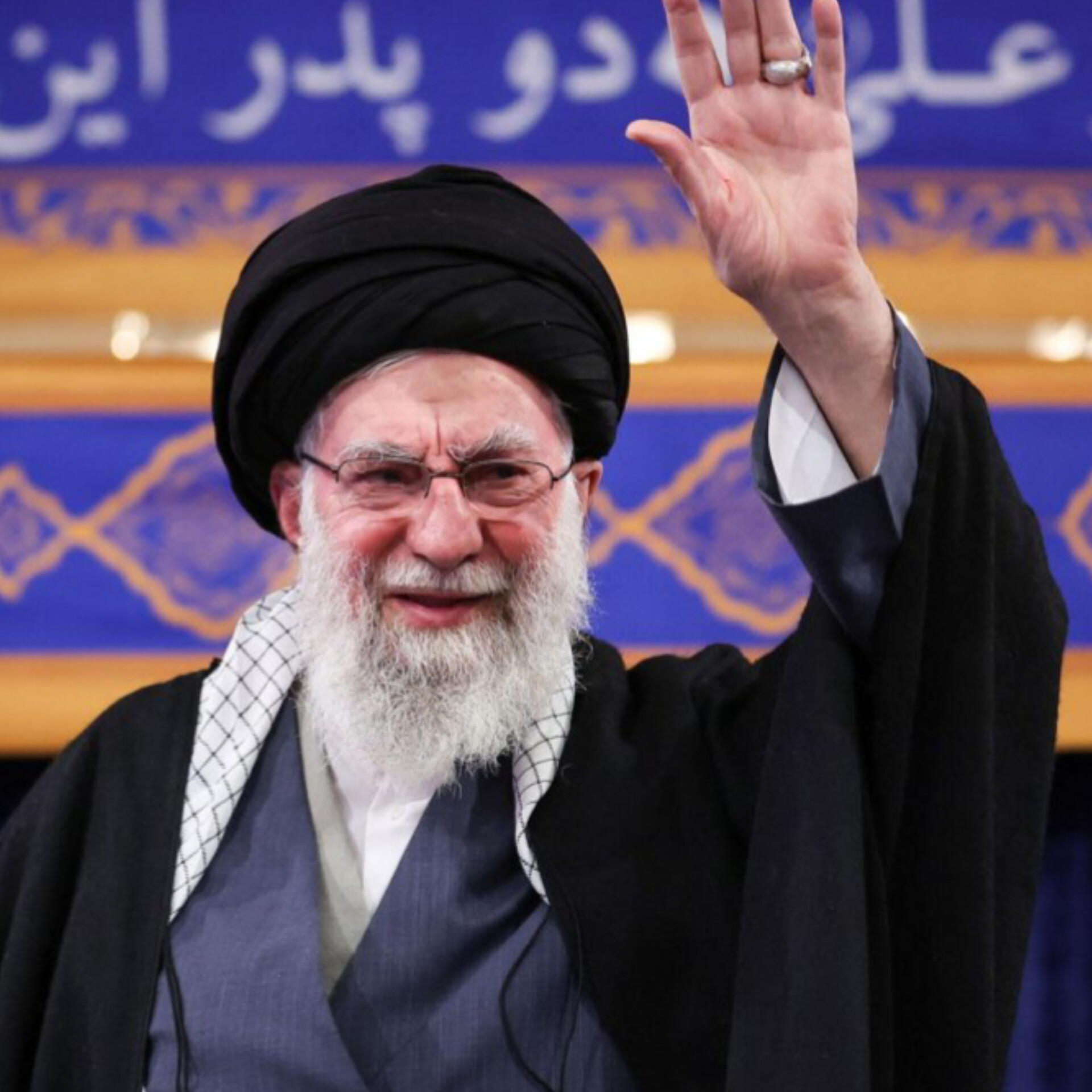
Ayatollah Ali Khamenei
By Our Reporter
Iran has announced a 40-day national mourning for its supreme leader, Ayatollah Ali Khamenei.
Iranian state media early Sunday confirmed the death of Khamenei in a coordinated U.S. and Israeli airstrike campaign targeting key Iranian sites.
The solemn announcement, broadcast on state television, described Khamenei’s death as martyrdom in service to the nation, a term deeply significant in Shi’a Islamic tradition, and called on citizens to observe the mourning period in line with religious customs.
Khamenei, 86, had led the Islamic Republic as Supreme Leader since 1989, wielding ultimate political and religious authority in Iran for more than three decades, making him one of the longest-serving leaders in the modern Middle East.
According to Iranian state television, the missile and air strike that killed Khamenei also resulted in the deaths of several senior Iranian defense officials and reportedly caused extensive damage to his compound in central Tehran.
The government’s declaration of 40 days of mourning, a period of reflection and commemoration rooted in Shi’a tradition, underscores the gravity of the moment for the Islamic Republic and challenges Iran’s political system with a sudden leadership void.
In addition to the extended mourning, state authorities ordered seven days of national holidays and the closure of all official offices, emphasizing the profound national impact of the Supreme Leader’s death.
The announcement comes amid an unprecedented escalation in regional conflict after the United States and Israel launched extensive military strikes on Iranian military and government targets in recent days as part of what U.S. leaders have termed an effort to counter Iran’s missile and nuclear threats.
U.S. President Donald Trump hailed the strike that killed Khamenei as a decisive blow against what he described as one of the world’s most oppressive figures, framing it as a step toward a more stable Middle East and calling on Iranian forces to stand down.
Israeli leaders also affirmed their role in the coordinated campaign, asserting that Khamenei and other strategic targets were eliminated in operations they described as essential for dismantling threats emanating from Tehran.
The deaths of Khamenei and other high-ranking Iranian officials have created an immediate power vacuum at the pinnacle of Iran’s theocratic system, where no clear successor had been publicly designated, raising questions about internal stability and future leadership.