

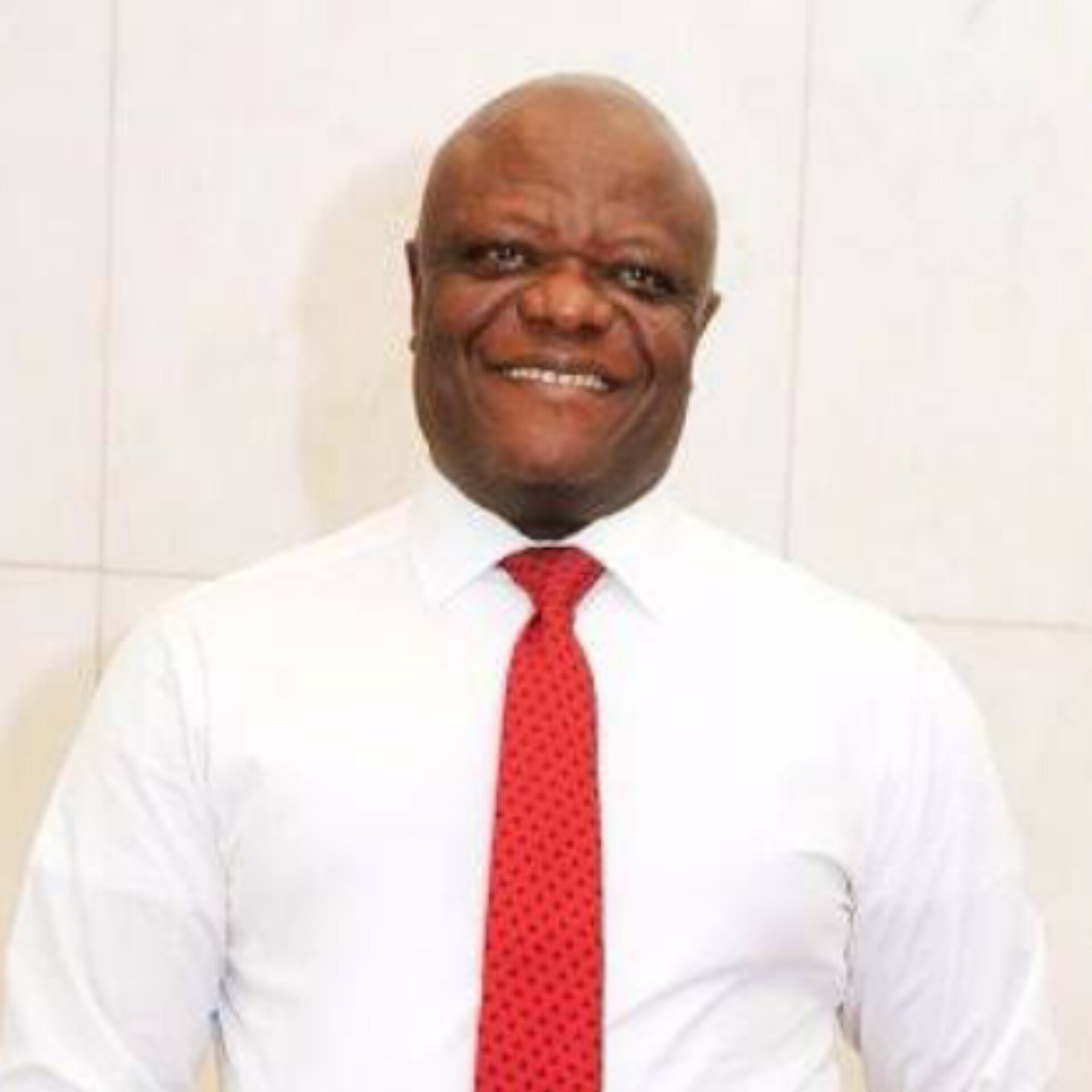
Abiodun Adeniyi
Ink and Influence: Memory, Identity and Public Imagination, By Abiodun Adeniyi
Professor Biodun Adeniyi
[BEING THE PREFACE TO DR. REUBEN ABATI’S ANTHOLOGY: PORTRAITS: PEOPLE, POLITICS AND SOCIETY]
The evolution of column writing is nearly synchronous with knowledge. Their contemporaneous development is exemplified in the 17th-century Scientific Revolution, when Francis Bacon promoted empiricism, and René Descartes prioritised rationalism, before modern science dawned with the thoughts of Galileo Galilei, Johannes Kepler, Isaac Newton, and Robert Boyle. Knowledge circulation exploded with the birth of the printing press, courtesy of Johannes Gutenberg’s invention. Even before then, however, civilisation had scholasticism, featuring Thomas Aquinas, Albertus Magnus, and Duns Scotus; Aristotelian cosmology and Natural Philosophy; Theological Authority and Divine Revelation; Humanism, cosmological models, and sacred Geography; Islamic and Arab knowledge traditions; and medieval mathematics and Astrology.
Column writing, however, was co-terminus with the age of science above, through pamphleteering in advance of the evolution of newspapering, which featured names like Addison and Steele in the 17th century, ahead of the likes of Charles Dickens, Ambrose Bierce, and George Orwell in the 18th century. A new age for column writing emerged in the 20th century with the exploits of Walter Lippmann, Dorothy Parker, Ernie Pyle, Jimmy Breslin, and Mike Royko. It became agitative, serving as a veritable tool for advocacy, as independence campaigners, such as Dr. Nnamdi Azikiwe, Herbert Macaulay, and Obafemi Awolowo, among others, either wrote columns or promoted publications that rose to column writing.
In recent history, Nigeria has produced outstanding columnists who have consistently used their voices to address topical issues, with an exceptional signature style. Some of these individuals include Lade Bonuola, Stanley Macebuh, Ray Ekpu, Dan Agbese, Dele Giwa, Mohammed Haruna, Olusegun Adeniyi, Simon Kolawole, Waziri Adio, Okey Ikechukwu, Dele Momodu, Farooq Kperogi, and Reuben Abati. They wrote regularly every week, over the years, building a cult of an expectant audience, becoming authorities in opinion moulding, highlighting issues, lamenting situations, analysing, suggesting policy initiatives, and signalling programme directions for the country.
In this mix, Dr. Reuben Adeleye Abati has emerged as an icon, a spokesperson of public intellectual inquisitions, and a luminary in deeply rooted, epistemic opinionating. A master wordsmith, he has conveyed this in a typically free-flowing and compelling prose, steeped in erudition, with the cadence of scholarship and added philosophic circumspection. Abati’s simplification of complex essences, from sophisticated regular prose to the conversational genre, in the dissemination of thoughts and meanings, demonstrates experimentation, high-level creativity, and a multi-levelled inclination to be pluridimensional.
Over the years, therefore, he has earned a place, not only as a leading public philosopher but also as a reference point for sweeping intellection and ideation. 2 It is the reason this anthology is long overdue, standing as one literary evidence from a consistent man of letters, an exceptional reasoner, and one with an inexhaustible capacity to engage. Made up of approximately ninety-six (96) articles, the collection covers a diverse range of subject matters, showcasing an encyclopaedic mindset, far beyond the ornamental, to include themes like power and politics; portrait of public figures; memory and mortality; culture; journalism and freedom of expression; global currents; popular culture, music and sports; and humour, irony and national character.
In the context of power and politics, both national and local, the writer explored democracy not only in its full elements but also in how individuals, directly or indirectly, shape its cause through their actions and inaction. The nature of political leadership, public accountability, and moral legacy across Africa and the world were in focus. Individuals that warranted the columnist attention included Justice Chukwudi Oputa, where the legendary jurist became a prism for the x-raying of the former President Olusegun Obasanjo’s Truth and Reconciliation Commission; former Zimbabwean President, Robert Mugabe, in a vexed demand for his exit after decades as president; Boni Iyayi, another problematic African leader, “our friend next door,” where the ratiocinator noted once more the inordinate use of power on the continent; and former Liberian President, George Weah, in a cautionary praise of the rise of the former footballer in Liberian politics.
He also focused on the popular Edo State politician, Chief Tony Anenih, whose craftsmanship earned him the moniker “Mr. Fix It.” Also in his radar was Omoyele Sowore, an unrepentant change activist, with decades of consistency in student and civil rights campaign; Bello Adoke, Senior Advocate of Nigeria (SAN), that Abati celebrated at 60, while also linking the celebration with the lawyer’s judicial travails under the former President Muhammadu Buhari’s administration; and on Mo Ibrahim, the African billionaire committed to good governance and continental progress, when no former African president qualified for his prize for good leadership.
Again, he returned home, to Nigeria focusing on President Olusegun Obasanjo, where the journalist celebrated him for an unusual commitment to broadening his knowledge, for pulling through the painstaking process of succeeding in a doctoral programme; Justice Tanko Mohammed, a former Chief Justice of the federation, upon his exit from office; and then dwelling on Pa Ayo Adebanjo, whose politics has been influential from the south-west region, onto the national stage, from a zeal to reverse the nation’s underdevelopment narrative. The eventual death of the sage was also a subject of a requiem that Abati penned, even though it was linked collectively to the passing of Aleperu Basibo.
In portraying icons, their ideals and impact, Abati harped on the realisation of the power of the greats to shape systems and societies. Here, he celebrated and examined the lives of individuals who moulded public consciousness. He realised there is a dialectical interconnection between persons and countries, in how they condition each other. This influenced his choice of individuals to dwell on, whether on their birthdays, at death, or on momentous occasions, regardless of whether they were Nigerians. He could not have missed Barack Obama, a former U.S. President and the first African American to 3 hold the position. Bill Clinton was also featured, the charismatic former U.S. President who visited Nigeria in 2021, as was Kofi Annan, the former Ghanaian Secretary-General of the United Nations (UN), for leaving a “legacy of service and idealism.”
Respected former Governor of Lagos State, Babatunde Raji Fashola, did not elude his analytical lens, just as the legendary Queen Elizabeth II, whose reign as Queen of England was as remarkable as her funeral. Pope Francis was, in his view, one more great Bishop of Rome, in addition to a farewell piece on the passing of the illustrious Cuban president, Fidel Castro. Boxing legend Muhammad Ali, the greatest, also caught his attention, as did three of Nigeria’s most prominent billionaires: Aliko Dangote, Mike Adenuga, and Femi Otedola, for their inclination for philanthropy. Others on his radar under the theme of individuals were Akinwunmi Adesina, Mohammed Gusau, at 80, and the celebrated pharmacist Julius Adelusi–Adeluyi, also at 80.
On memory and mortality, he rigorously engaged the mystery of death, eventually constraining himself to legacies and tributes. He dwelled on how death re-contextualises lives and legacies, especially those of public figures and cultural bearers. Ringing through his evaluation of the mystery is a hazy finality where no mortal can be exhaustive in its scope, including when and how. Through its visits to Godwin Agbroko, Moshood Abiola, Abba Kyari, Remi Oyo, Adebowale Adefuye, Jimoh Odutola, Bola Ige, Justice Somolo, Debo Akande, Bisi Olateru-Olagbegi, Justice Tanko Mohammed, and what he called “The Death Bandwagon: 1997 and its mortal sentences,” the thinker laboured in instalments to dissect the phenomena, after the exhaustive fashion of the philosophers from Plato through Socrates and Aristotle, to Confucius, Derrida, and Judith Butler.
He does not appear to have given up, just as he would not be striving in vain in contextualising man’s terminal point. The author would also not miss his mentors, contemporaries, and mentees in the thought and writing endeavour when the occasion warranted. He viewed literature, intellectualism, and art as tools of resistance, identity, and social critique. In 13 articles, therefore, he zeroed in on his family, providing piercing dissections of their productions, which was a sufficient demonstration of their enduring impact and an inspiring indelibility. Authors in focus included Chinua Achebe, Ola Rotimi, Wole Soyinka, Odia Ofeimun, John Pepper Clark, Peter Pan, Femi Osofisan, Onukaba Adinoyi-Ojo, and Dapo Adelugba.
In the theme of Journalism and Freedom of Expression, he equally examined Kunle Ajibade, Olusegun Osoba, Nduka Obaigbena, and Pat Utomi. Journalism, as a form of resistance, witness, and public duty, occupied his attention in this regard. The transdisciplinary nature of his perspectives led to the following themes that explore global currents involving technology, identity, and surveillance. Here, he illustrated the intersection of technology, information freedom, and national sovereignty through his pieces on Julian Assange: WikiLeaks, Whistleblowing, and the Open Society Ideal; the Mark Zuckerberg visit: Trump and Wole Soyinka’s Green Card; and the Dangerous Man in North Korea.
His focus on popular culture harped on music and sports, where cultural memory and the power of celebrity in shaping modern African identity were primary. Titles here are The Return of Tiger Woods; Beckham: The Match of His Life; Shina Peters at 60: A Life in Music; Allen Onyema, NIIA and the sports Hall of fame; and When Helicopters Crash: Wigwe, Kobe, Iran ……. The collection concluded with a thread that reflected the Nigerian experience, featuring humour, irony, and national character, which exhibited everyday life and the contradictions of Nigerian identity, expressed through wit, satire, and social commentary. Noted here is the Average Nigerian: Victim and Hero; the man who named his dog “Buhari,” Still on That Dog Matter; Arisekola and the unknown students; Adeyemi-Bero: Tribute to “Mr Lagos” and Abubakar’s style, about General Abdulsalami Abubakar, a former Nigerian Head of State.
Defining this anthology is the power of knowledge, an intimacy with issues, and a revolving sagacity, woven around notions, culminating in the cementation of a place in the evolution of public intellectualism. The collection is right on the mark, grounded in learning, far beyond raw information, valuable for readers across ages, classes, and geographies. It depicts the writer’s operational rhythms at the soul of a nation, history in fragments, in signature prose-inclusive, measured, and ceaseless. Acting as curator and conscience, each piece comes like a pill, with a staggering range of consequential emotional and intellectual effects. Regrettably, despite the essay’s focus on the plight of Nigerians, declining institutions, corruption, moral exhaustion, and political inadequacies remain evident, which is why he has not given up, using the airwaves as a TV and Radio presenter. In this portfolio, however, Dr. Abati has scored an excellent goal in terms of the broad relevance, depth, and memorability of the compilation. An outstanding digest, indeed.
■ Abiodun Adeniyi, PhD (Leeds), Professor of Communication, Baze University, Abuja.
July 2025.

