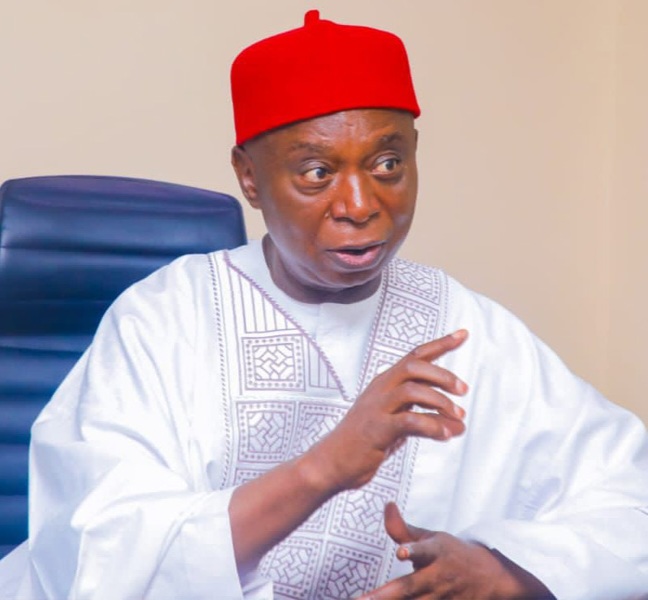
Senator Ned Nwoko
From the campaign for Anioma State creation to 33 sponsored bills, 22 motions, healthcare interventions, education reforms, infrastructure advocacy and grassroots development, the Delta North senator’s legislative journey is attracting renewed attention.
In the politics of representation, there are moments when the significance of a public office extends beyond the position occupied. It is reflected in the issues a representative chooses to pursue, the causes championed, the legislative battles undertaken and the extent to which the concerns of constituents find expression at the highest levels of government.
For Senator Prince Ned Munir Nwoko, representing Delta North Senatorial District in the 10th National Assembly, one issue has consistently occupied a central position in his public and legislative engagement: the Anioma question.
But beyond the demand for Anioma State, the senator’s legislative activities have covered a broad range of national issues, including healthcare, education, economic reform, environmental protection, security, institutional development and the welfare of vulnerable Nigerians.
Three years into the 10th Senate, Nwoko’s published legislative scorecard records 33 sponsored bills and 22 motions. The figures, announced in June 2026, provide an indication of the volume and diversity of legislative matters his office says it has pursued since his inauguration.
His activities have also attracted wider attention, with the National Assembly Library Trust Fund reporting in September 2026 that he was among the senators named in BusinessDay’s Top 10 Senators of the 10th National Assembly.
For Delta North, however, the larger question is not simply how many bills have been introduced. It is how these legislative initiatives, constituency interventions and development proposals can translate into lasting improvements in the lives of the people.
THE ANIOMA DREAM: A CAUSE THAT HAS BECOME CENTRAL TO HIS REPRESENTATION
For generations, the creation of Anioma State has remained an important aspiration among the Anioma people of Delta State.
The demand is rooted in the desire for administrative recognition, political inclusion, equitable representation and a stronger institutional platform for the development of Anioma communities.
For many years, the aspiration existed largely in political discussions, community engagements and advocacy platforms.
Senator Nwoko has sought to advance the issue through the constitutional amendment process.
His proposed constitutional alteration bill for the creation of Anioma State is among the most prominent legislative initiatives associated with his representation.
The bill has passed first and second readings and undergone a zonal public hearing, according to the legislative progress record published by an Anioma advocacy platform.
The significance of this development lies in moving the conversation beyond political declarations and placing it within the formal constitutional process.
The proposed state would bring together the Anioma-speaking communities of Delta North under a separate state structure.
For proponents, the aspiration represents more than the creation of another administrative unit. It is about identity, recognition, access to government, equitable distribution of resources and the opportunity to determine the region’s development priorities.
The process, however, remains subject to the constitutional requirements for creating a new state, including the necessary legislative and democratic approvals.
Nwoko’s continued involvement in the matter has ensured that Anioma State creation remains a prominent issue in discussions about the future of Delta State and Nigeria’s federal structure.
For the senator, it is a cause that extends beyond the usual cycle of constituency politics.
33 BILLS, 22 MOTIONS: INSIDE HIS LEGISLATIVE FOOTPRINT
One of the most notable features of Nwoko’s three-year scorecard is the reported volume of legislative proposals and motions.
According to the scorecard released in June 2026, he sponsored 33 bills and moved 22 motions.
The bills address different aspects of national life, from public health and education to constitutional reform, social protection, security and economic development.
Importantly, these legislative proposals are at different stages of consideration. Some have advanced further than others, while some have been reported as having secured Senate approval.
Among the notable initiatives are the following:
1. NATIONAL AGENCY FOR MALARIA ELIMINATION
One of the major legislative milestones associated with Nwoko is the National Agency for Malaria Elimination Establishment Bill.
Nigeria continues to face a substantial malaria burden, making prevention, diagnosis, treatment and public health coordination important national priorities.
The senator’s proposal seeks to establish a dedicated institution to coordinate a comprehensive national response to malaria.
The proposed agency would provide an institutional framework for prevention, environmental management, surveillance, research, public awareness and elimination strategies.
The legislation received Senate approval after consideration by the relevant committee and passed its third reading in June 2026.
Nwoko described the development as a significant step towards moving Nigeria from managing malaria to pursuing its eventual elimination.
The importance of the legislation lies in its proposed shift towards a coordinated national strategy rather than relying exclusively on treatment after infection.
If effectively implemented following completion of the required legislative process, the framework could strengthen institutional coordination in one of Nigeria’s persistent public health challenges.
2. UPGRADE OF FEDERAL COLLEGE OF EDUCATION (TECHNICAL), ASABA
Education, particularly technical and vocational training, is another area receiving attention in Nwoko’s legislative agenda.
His bill seeking to upgrade the Federal College of Education (Technical), Asaba, into the Federal University of Technology, Asaba, is intended to expand access to specialised higher education.
The proposal is particularly relevant at a time when Nigeria is seeking to strengthen its industrial capacity, technical workforce and technological competitiveness.
A stronger technical university structure in Asaba could provide additional opportunities for students pursuing careers in engineering, technology, applied sciences and related disciplines.
The initiative also speaks to the need to align the country’s education system with the demands of a modern economy.
3. FEDERAL COLLEGE OF AGRICULTURE, IDUMUJE-UNOR
Agriculture remains central to Nigeria’s food security and rural economic development.
Nwoko’s legislative initiatives have included a proposal for the establishment of a Federal College of Agriculture in Idumuje-Unor, Delta State.
The objective is to expand agricultural education, research and professional training.
Such an institution could create opportunities for young people interested in modern farming, agribusiness, agricultural technology and food production.
For Delta North, the proposal also presents an opportunity to strengthen the relationship between education and the agricultural potential of rural communities.
4. ORTHOPAEDIC HOSPITAL FOR ONICHA-UGBO
Access to specialised healthcare remains a challenge in many parts of Nigeria.
The proposed establishment of an orthopaedic hospital in Onicha-Ugbo, affiliated with the Delta State University Teaching Hospital, is another initiative associated with Nwoko’s legislative record.
The proposal seeks to improve access to specialised medical services, particularly for patients requiring orthopaedic treatment and related care.
If realised, the institution could reduce the pressure on distant specialist facilities and improve access to treatment for residents of Delta State and neighbouring communities.
5. DIASPORA VOTING
Nwoko has also pursued legislative reforms concerning the participation of Nigerians living outside the country in the democratic process.
The diaspora voting proposal addresses the question of how Nigerians abroad can exercise their constitutional voting rights.
With millions of Nigerians living and working outside the country, the issue raises important questions about electoral inclusion, technology, verification and the administration of credible elections.
The proposal seeks to expand the conversation about making Nigeria’s democracy more inclusive.
6. FIRST-AID AND EMERGENCY RESPONSE TRAINING
Another proposal associated with his legislative work seeks to promote mandatory first-aid, cardiopulmonary resuscitation and automated external defibrillator training in homes, schools, institutions and workplaces.
The importance of emergency response cannot be overstated.
In many situations, the first few minutes following an accident or medical emergency can determine whether a victim survives.
The proposal seeks to improve public awareness and equip ordinary citizens with basic emergency response skills.
7. SOCIAL MEDIA PLATFORMS AND PHYSICAL OFFICES IN NIGERIA
The growing influence of digital platforms has created new challenges involving data protection, consumer rights, accountability and the regulation of online activities.
Nwoko has sponsored a proposal seeking to amend the Nigeria Data Protection Act to require social media platforms to establish physical offices within Nigeria.
The proposal is intended to strengthen accountability and provide a more accessible framework for addressing complaints and disputes involving digital platforms.
It also raises broader questions about the relationship between international technology companies and the countries in which they operate.
8. NATIONAL RANCHING AND LIVESTOCK DEVELOPMENT
His legislative agenda has also included the National Ranchers Establishment, Development and Management Bill.
The proposal seeks to promote organised livestock farming, address challenges associated with open grazing and improve food security.
The subject is particularly important because of the security, environmental and economic implications of conflicts associated with livestock movement and farming communities.
A properly developed ranching framework could support modern livestock production while providing a structured approach to addressing these longstanding concerns.
MOTIONS THAT ADDRESS NATIONAL AND REGIONAL CONCERNS
Beyond bills, Nwoko’s motions have covered several important issues.
His legislative engagements include:
* The need for reparations for historical injustices and the mitigation of neocolonialism in African countries.
* The need for redress, healing and reconciliation following the 1967 Asaba Massacre.
* Investigation of crude oil theft in the Niger Delta.
* The need to address gas flaring and enforce environmental regulations in Ndokwa land and the Niger Delta.
* The delayed electricity supply and proposed step-down of the Okpai Independent Power Plant.
* The need to improve the security situation in parts of Delta State.
* The need to address flooding in communities across Delta North.
* Proposals concerning the regulation of social media platforms.
* The need to end compulsory police reports before emergency medical treatment.
* Calls for improved security standards in the financial technology sector.
These motions demonstrate the range of issues being brought before the Senate through his legislative activities.
They also highlight the connection between national policy and the everyday challenges confronting communities in Delta North.
CRUDE OIL THEFT: TAKING THE NIGER DELTA’S CONCERNS TO THE NATIONAL STAGE
The Niger Delta’s oil resources remain central to Nigeria’s economy.
Yet, communities in the region continue to contend with environmental degradation, insecurity, economic disruption and the consequences of illegal petroleum activities.
Nwoko’s role as Chairman of the Senate Ad Hoc Committee on Crude Oil Theft places him within one of the important national investigations involving the country’s petroleum sector.
The committee’s work concerns the causes and consequences of crude oil theft, the networks involved and the wider implications for national revenue and security.
For Delta North, particularly communities within the Ndokwa axis, the issue has direct relevance.
The region’s environmental concerns, gas flaring, electricity infrastructure and relationship with the oil and gas industry have remained important subjects of public discussion.
Effective oversight in this area is essential, not only for protecting national revenue but also for ensuring that communities in resource-producing areas are not left to bear the environmental and economic costs of petroleum activities.
REPARATIONS AND THE HISTORICAL QUESTION
Another important dimension of Nwoko’s legislative responsibilities is his chairmanship of the Senate Committee on Reparations and Repatriation.
The subject of reparations has increasingly featured in international conversations about colonialism, slavery, historical injustice and the recovery of African cultural heritage.
Nigeria’s historical experience, including the 1967 Asaba Massacre, forms part of the wider conversation about historical memory, justice and reconciliation.
Through his committee responsibilities and legislative motions, Nwoko has engaged with issues concerning historical redress and the recovery of African heritage.
The work has a national and continental dimension, linking Nigeria’s historical experience with wider African discussions about recognition, restitution and justice.
It also gives Delta State a connection to a broader conversation about historical reconciliation and the preservation of collective memory.
THE GRASSROOTS QUESTION: WHAT IS HAPPENING ACROSS THE NINE LOCAL GOVERNMENT AREAS?
While legislative activities in Abuja attract attention, representation is ultimately expected to make a difference in the communities where people live.
This is where constituency development becomes particularly important.
According to the senator’s published scorecard and reports on his interventions, his constituency activities have covered healthcare, education, electricity, water, agriculture, youth empowerment and community infrastructure across Delta North’s nine local government areas.
HEALTHCARE: TAKING MEDICAL INTERVENTIONS CLOSER TO THE PEOPLE
Healthcare interventions have included medical outreaches, the provision of medical equipment and support for primary healthcare facilities.
Reports on his constituency activities have highlighted medical outreaches across the district, including interventions involving primary healthcare centres.
Such programmes are important in communities where access to specialised medical services can be difficult or expensive.
The objective is to bring medical attention closer to residents, support vulnerable households and strengthen healthcare delivery at the grassroots.
The long-term challenge, however, is ensuring that facilities are adequately staffed, equipped and maintained so that interventions translate into sustainable healthcare services.
EDUCATION: INVESTING IN THE NEXT GENERATION
Education remains one of the most important foundations of development.
Nwoko’s constituency interventions have included scholarship assistance, support for students, educational materials, classroom improvements and ICT-related initiatives.
His wider educational agenda also includes proposals for new and upgraded federal institutions within Delta State.
These initiatives reflect the importance of expanding opportunities for young people, particularly those from households that may struggle to meet the financial demands of education.
For a district with significant human capital potential, investment in education is an investment in its future workforce.
ELECTRICITY: THE OKPAI POWER QUESTION
Few issues affect economic activity as directly as electricity.
For communities in Delta North, especially within the Ndokwa axis, the need for improved electricity supply has remained a longstanding concern.
Nwoko has drawn attention to the Okpai Independent Power Project step-down initiative and the Ogwashi-Uku electricity step-down project.
The objective is to improve the distribution of electricity generated within the region and expand access to power for households, businesses and industries.
The significance is considerable.
Reliable electricity can improve commercial activity, reduce operating costs, support small businesses and create an environment for investment.
The success of these initiatives will ultimately be measured by actual electricity delivered to communities and the number of households and businesses that benefit.
WATER PROJECTS AND COMMUNITY INFRASTRUCTURE
Access to clean water remains a basic development priority.
Reports of constituency interventions have included solar-powered water schemes and borehole projects in communities such as Idumuje-Ugboko, parts of Aniocha North and Umunede in Ika North East.
Water projects have the potential to improve sanitation, reduce the burden of travelling long distances to obtain water and support local economic activity.
The reported infrastructure interventions also include solar streetlights and other community-focused projects.
In rural communities, streetlighting can improve visibility and support safer movement after dark.
The wider development challenge is ensuring that these projects remain functional beyond their commissioning.
YOUTH AND WOMEN EMPOWERMENT
The economic empowerment of young people and women is another important component of constituency development.
Reported interventions include vocational training, capacity-building programmes, agricultural support and empowerment initiatives.
These programmes are particularly relevant in communities where unemployment and limited access to capital remain major obstacles to economic independence.
Skills acquisition can provide young people with opportunities to establish businesses, participate in productive economic activities and contribute to household incomes.
For women, access to training, equipment and financial support can strengthen participation in local commerce and agriculture.
The broader objective should be to create sustainable economic opportunities rather than temporary assistance.
AGRICULTURE AND RURAL ECONOMIC DEVELOPMENT
Delta North has significant agricultural potential.
The promotion of agricultural education, livestock development, modern farming practices and access to equipment can contribute to increased productivity.
Nwoko’s legislative proposals on agricultural education and ranching, alongside reported constituency interventions involving farmers, demonstrate the place of agriculture in his development agenda.
The challenge is to connect these interventions with markets, financing, storage facilities, processing infrastructure and modern agricultural technology.
Such connections are essential if rural communities are to benefit fully from agricultural investment.
ANIOCHA NORTH CONSTITUENCY II: RESTORING REPRESENTATION
Another important issue in Nwoko’s legislative activities concerns the restoration of Aniocha North Constituency II.
The matter has its roots in a longstanding electoral representation dispute and a 2019 Supreme Court judgment.
The restoration process involved legislative action and concurrence between the Senate and the House of Representatives.
The development was highlighted in the senator’s legislative scorecard and subsequently reported by the National Assembly Library Trust Fund.
Its significance extends beyond administrative adjustments.
Constituency representation determines how communities participate in the democratic process and how effectively their interests are presented within the legislative structure.
The development is therefore important to the affected communities ahead of the 2027 electoral cycle.
RECOGNITION BEYOND DELTA NORTH
The senator’s legislative activities have also attracted attention beyond his immediate constituency.
In September 2026, the National Assembly Library Trust Fund published a report announcing that Senator Ned Nwoko had been named among BusinessDay’s Top 10 Senators of the 10th National Assembly.
The report highlighted his legislative output, committee responsibilities, oversight activities and advocacy for economic development and institutional reforms.
It also drew attention to his constituency interventions involving medical outreaches, primary healthcare facilities, education, ICT centres, vocational training and agricultural support.
While recognition provides an indication of public and institutional attention, the ultimate assessment of legislative performance remains tied to the effectiveness of policies, the completion of projects and the practical benefits delivered to citizens.
BEYOND POLITICS: THE QUESTION OF LEGACY
The story of political representation is often shaped by the issues that outlive individual tenures.
For some representatives, the defining issue may be infrastructure. For others, it may be education, economic reform, security or social welfare.
In Nwoko’s case, the Anioma State campaign has become one of the most prominent features of his public engagement.
But the wider legislative record suggests an agenda that extends into national healthcare policy, education, environmental protection, social security, electoral reform and economic development.
His committee responsibilities have also connected Delta North to broader national conversations involving crude oil theft, reparations and the recovery of African heritage.
The real test of these efforts will be measured by what ultimately happens.
Will the Anioma State proposal successfully navigate the constitutional process?
Will the proposed educational institutions become operational?
Will the electricity step-down initiatives deliver reliable power to communities?
Will healthcare interventions translate into stronger and better-equipped facilities?
Will young people and women gain sustainable economic opportunities?
These are the questions that will determine the lasting impact of his representation.
THE ROAD AHEAD: ANIOMA, DELTA NORTH AND THE EXPECTATIONS OF THE PEOPLE
As the 10th National Assembly continues its work, the expectations of constituents remain substantial.
Delta North is a district with diverse communities, significant economic potential and longstanding development priorities.
Its people expect effective representation, improved infrastructure, stronger educational opportunities, accessible healthcare, electricity, economic empowerment and meaningful participation in national affairs.
For Anioma people, the demand for state creation remains a particularly important political aspiration.
Senator Ned Nwoko has placed that demand within the constitutional amendment process while pursuing other legislative and constituency development initiatives.
The next phase will require sustained engagement with the relevant institutions, transparent reporting of progress and effective collaboration among political leaders, traditional institutions, community organisations and the people themselves.
Ultimately, public service is not defined by headlines, political speeches or the number of proposals introduced.
It is defined by the difference made in people’s lives.
For Senator Ned Nwoko, the Anioma agenda, his legislative footprint and the development expectations of Delta North will remain central to how his representation is discussed and assessed.
THE MAN. THE MANDATE. THE ANIOMA AGENDA.
SENATOR PRINCE NED MUNIR NWOKO — REPRESENTING DELTA NORTH IN THE 10TH NATIONAL ASSEMBLY.