Yahaya Bello
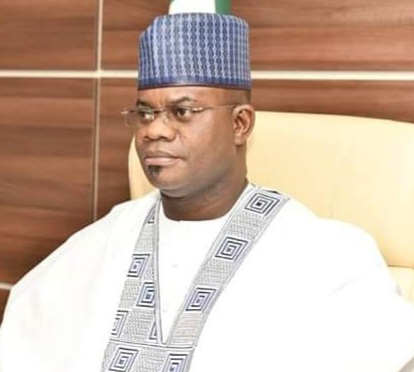
The prevailing opinion on the former Kogi state governor Yahaya Bello has suffered the fatal flaw of received, unexamined orthodoxy.
This dominant opinion founded on hate against Bello,and sufficiently promoted by some sections of the media and worshipped as god by some media aficionados- without evidentiary validity of its correctness is a great disservice to intelligence and fact checking. The negative narrative around Bello tragically belongs in the realm of the unverified, contrived myth and outright lies fuelled and financed by political enemies.
The mythical side is partly political, partly predetermined to achieve a teleological end, which is to demarket his extraordinary legacy of achievements.
This write up is not to make a saint out of Bello- for he’s not one; like all of us -but to separate the wheat from the chaff, the real persona from the mythical of media and opposition creation.
The idea of this effort is as much to provide enough information for a catholic mind to question contemporary dogmatic impression and barefaced lies about Bello’s supposed “sins”.
Bello in his eight years as Kogi state governor is presented as a total failure, a man who ran the state aground, had all the opportunity and state resources to make the confluence state a luxuriating El dorado, but deliberately chose to turn it into Dante’s inferno. How correct is this position?
A background knowledge of the political sociology of the confluence state will provide an ample angle of critical vision to situate Bello’s immense contribution to righting social injustice that had formed part of the political fabric of the state right from its creation in 1991.
For clarity and the benefit of the uninformed of the political dynamic of the state, it will be in order to force a knowledge that Kogi was forged from a triad of competitive tribes : Igala in the Kogi east, Ebira in Kogi central and the Okun Yoruba in Kogi west, each locked in fierce struggle for control and political competition.
In this competitive struggle, Igala which produced the first governor in person of Abubakar Audu, did not relinquish power which it held exclusively since 1991 until 2015.
The stranglehold would have continued if Audu who won the 2015 election had not died suddenly, making room for Yahaya Bello – who came second in the election- to come to power.
In the imagination of many, Bello was ” Simon Bolivar” who liberated Kogi west and central central from the imperialist agenda of the Igala in the Kogi east. Thus in the early days he was as a symbol of hope, and of the immense possibility of renewal after nearly two decades of political injustice.
But the “roforofo” fight and competition for power, influence and domination, among political actors in the state across party lines, suddenly made Bello the whipping boy only because he managed to win in the fight in which all sides played dirty. Suddenly his symbolism as harbinger of hope and renewal was drowned in the stormy sea of propaganda and mudslinging which fatally swallowed his achievements.
The ongoing EFCC case of which no court has found him guilty yet was used, dressed up as final verdict of his venality even when court has not said so.
Facebook haters- who are data boys of some faceless political cowards in Kogi west have taken on Bello vilification as pastimes, aided by compromised sections of the media.
How can a matter still in court suddenly become a concluded case of guilty as charged in court of Facebook attack dogs! This shows how far we have descended in this country where lack of patience for due diligence and thoroughness in unearthing facts before passing judgement has become commonplace.
Without any fear of contradiction, Yahaya Bello’s unprecedented 8-year reign brought significant progress to the state. This is no myth but verifiable facts.
He came to power in January 2016 and left in January 2024 with key achievements across infrastructure, education, healthcare, agriculture, and security.
Bello pursued infrastructure and urban renewal with zeal, initiating and completing
Ganaja flyover; which was Kogi state’s first major urban flyover in Lokoja.
He built and rehabilitated over 400 kilometers of roads, including township roads in Lokoja, the Kabba–Iyamoye corridor, and the Shintaku–Gboloko road. And he replicated the feat across the three senatorial zones in the state.
He also constructed the state’s first-ever Kogi Revenue House and the Igala Unity House, alongside the remodeling of Lugard House.
He built and equipped a 250-bed ultra-modern reference hospital featuring specialized facilities like a hyperbaric oxygen chamber.
He also remodeled and upgraded general and zonal hospitals in Kabba, Idah, and Okene, and expanded primary healthcare centers.
Bello deeclared free public education from primary through secondary school levels, covering WAEC, NECO, and JAMB registration fees for students.
Bello also established the Confluence University of Science and Technology (CUSTECH) in Osara and Kogi State University, Kabba.
As part of his desire to deepen quality education, he recruited nearly 4,000 new statewide teachers and built or renovated over 600 basic education schools.
In the area of agriculture, he
onstructed and commissioned a 4-billion-naira rice milling factory in Ejiba with a capacity of over 1,000 bags daily.
He also boosted the state’s monthly IGR significantly through tax digitalisation and the new revenue house.
He also established local security frameworks and partnered with federal military forces, including the Nigerian Navy Ship (NNS) Lugard base, to curb violent crime and kidnapping.
In order to deepen inclusivity, he promoted youth and women participation in governance, exceeding the 35% affirmative action threshold in appointments.
While supporters credit him with massive development and reform, his administration and post-tenure period have also faced major public debate and high-profile financial corruption charges. But these remain allegations and have not been proven. Whatever anyone may see, Bello has done well in the state during his time in the saddle, and it’s precisely because of his record that he remains the strongest challenger to Senator Natasha Akpoti Uduaghan for the Kogi central Senate seat in 2027 election.
Comrade Oyiza Ahmed
(writes in from Abuja)