

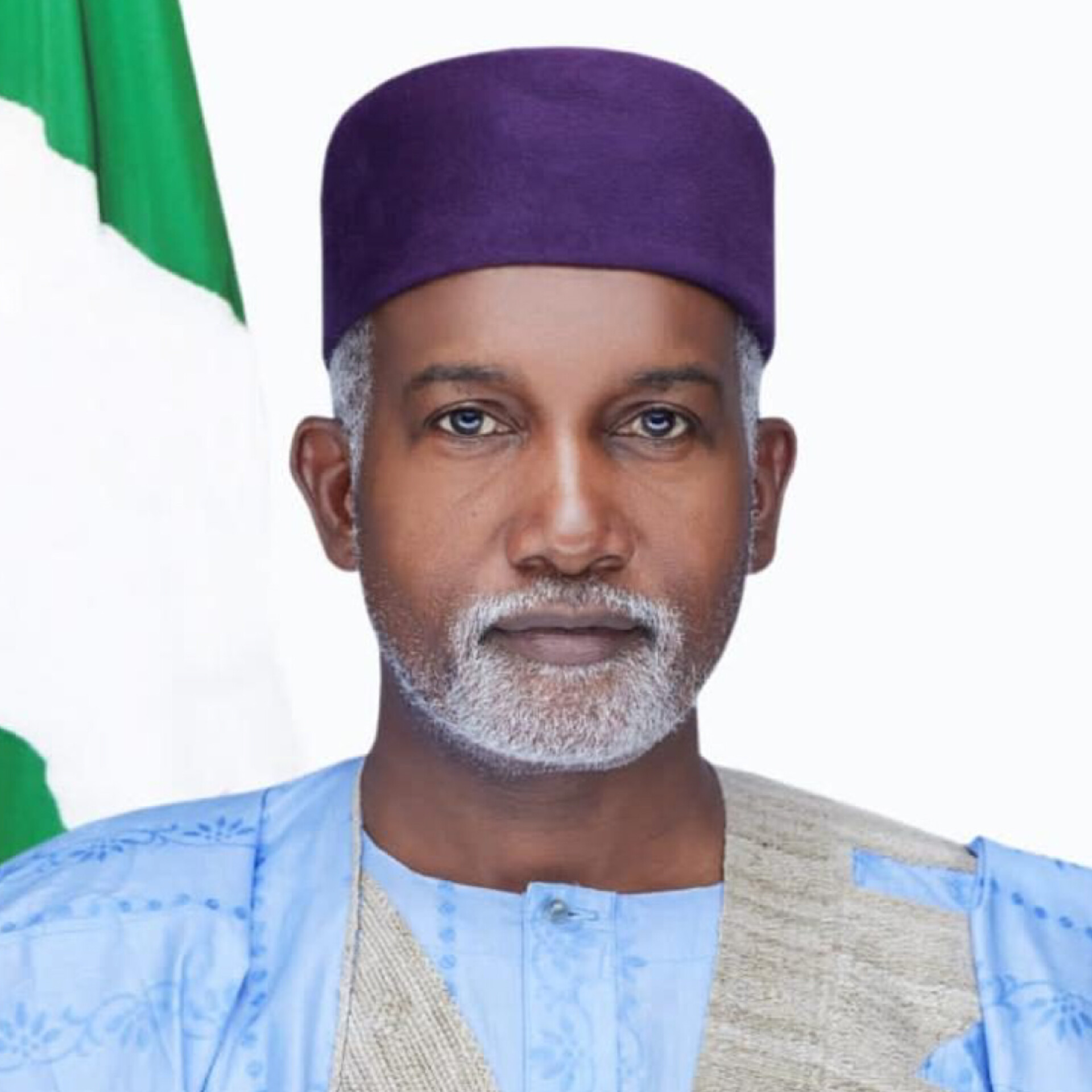
Yusuf Maitama Tuggar
Within the quiet but consequential halls of Nigeria’s Ministry of Foreign Affairs, Ambassador Yusuf Maitama Tuggar has carved out a reputation for calm authority in an era defined by global uncertainty.
Since his appointment in August 2023 by President Bola Ahmed Tinubu, he has steered Nigeria’s diplomacy with measured confidence, balancing international expectations with national interests.
Yet, beneath the suit and diplomatic protocol lies a story deeply anchored in Bauchi soil, community service, and a lifelong commitment to people before politics.
Tuggar’s stewardship of Nigeria’s foreign policy reflects the spirit of President Tinubu’s Renewed Hope Agenda, which seeks national renewal through democracy, development, demography, and diaspora engagement.
His work speaks to a larger narrative: that diplomacy is not only about global negotiations but also about how international engagement translates into dignity and opportunity at home.
Long before he became Nigeria’s chief diplomat, Tuggar was already known in Bauchi for something more enduring than public office, a quiet but consistent record of philanthropy.
Born on March 12, 1967, in Udubo, Gamawa Local Government Area of Bauchi State, Yusuf Maitama Tuggar comes from a lineage familiar with public service.
He is the son of the late Senator Abubakar Tuggar, a respected political figure in his time.
Educated both in Nigeria and abroad, Tuggar built a varied career that cut across business, philanthropy, and politics.
Even before national attention found him, his name was associated with community upliftment through the Ambassador Yusuf Tuggar Foundation.
The foundation’s interventions, ranging from food distribution to families across nine local government areas to the provision of grains and motorcycles to struggling households, earned him a reputation as a man driven by empathy rather than ambition.
In Bauchi, he is often described as a native son and a statesman who places humanity above partisan lines.
His formal political journey began in 2007, when he was elected to the House of Representatives to represent Gamawa Federal Constituency, a position he held until 2011.
During his time in the National Assembly, Tuggar served on committees covering Foreign Affairs, Public Procurement, and Petroleum, roles that quietly prepared him for the international responsibilities that lay ahead.
His diplomatic profile rose significantly between 2017 and 2023, when he served as Nigeria’s Ambassador to Germany.
In Berlin, he focused on economic diplomacy, strengthening trade relations, encouraging investment, and promoting Nigeria’s cultural and economic potential. That experience would prove invaluable when he was appointed the 29th Minister of Foreign Affairs in 2023.
As minister, Tuggar has approached the role with strategic clarity.
Central to his tenure is the articulation and implementation of Nigeria’s “4D Doctrine”, Democracy, Development, Demography, and Diaspora.
This framework has redefined Nigeria’s engagement with the world, placing emphasis on economic growth, youth potential, and the strategic value of Nigerians in the diaspora.
Under his leadership, Nigeria has intensified efforts to attract foreign investment into key sectors such as energy, infrastructure, and agriculture, aligning diplomatic outreach with domestic reform priorities.
His role in strengthening bilateral relations has been notable, including a high level engagement with Niger in December 2025 aimed at renewing cooperation in security and trade.
Perhaps more striking has been Tuggar’s handling of sensitive geopolitical matters.
In moments of heightened international tension, he has projected composure and clarity, using media diplomacy to counter misinformation while firmly asserting Nigeria’s sovereignty.
His public positions on global issues, including the Palestinian question, have consistently emphasised dialogue, trust building, and peaceful cooperation.
Even during periods traditionally marked by reduced official activity, such as Christmas and Boxing Day, Tuggar ensured Nigeria’s voice remained present in international discourse, reinforcing the country’s role as a reliable partner in the global fight against terrorism without surrendering its independence of thought or action.
In doing so, he has supported the Renewed Hope Agenda’s broader goals of economic stability, security, and diaspora inclusion.
Back home in Bauchi, these achievements have only deepened the respect many already held for him.
His earlier philanthropic efforts continue to resonate, now amplified by his national and international profile.
A notable example was his visit in June 2025 to Azare, where traders had lost their shops following a demolition exercise ordered by the state government.
Tuggar openly sympathised with the affected traders, criticised the action, and pledged support towards rebuilding their livelihoods.
The gesture was widely praised and reinforced the perception of a leader who remains connected to ordinary people despite operating on the global stage.
Unsurprisingly, conversations about Tuggar’s future have grown louder.
Political watchers and social media commentators frequently speculate about a possible return to Bauchi politics ahead of the 2027 elections.
Rumours of a gubernatorial ambition continue to circulate. Supporters argue that Tuggar’s blend of international exposure, political experience, and grassroots compassion positions him as a unifying figure capable of restoring calm and delivering tangible development to Bauchi State.
Despite existing political tensions within the state, many believe he could bridge divides and translate federal goodwill into local progress. As one recurring sentiment puts it, Bauchi is proud of him.
From the rural landscapes of Bauchi to diplomatic postings in Berlin and the nerve centre of Nigeria’s foreign policy in Abuja, Yusuf Maitama Tuggar’s journey is one defined by service, resilience, and quiet impact.
In an age where leadership is often loud but shallow, his path offers a reminder that enduring influence is built on substance and sincerity.
Whether his future remains in international diplomacy or leads him back home, his record suggests a consistent thread: a global outlook anchored by a deep sense of local responsibility.

